Decorative Concrete Care and Maintenance
A practical guide to cleaning, protecting and knowing when decorative concrete needs maintenance.
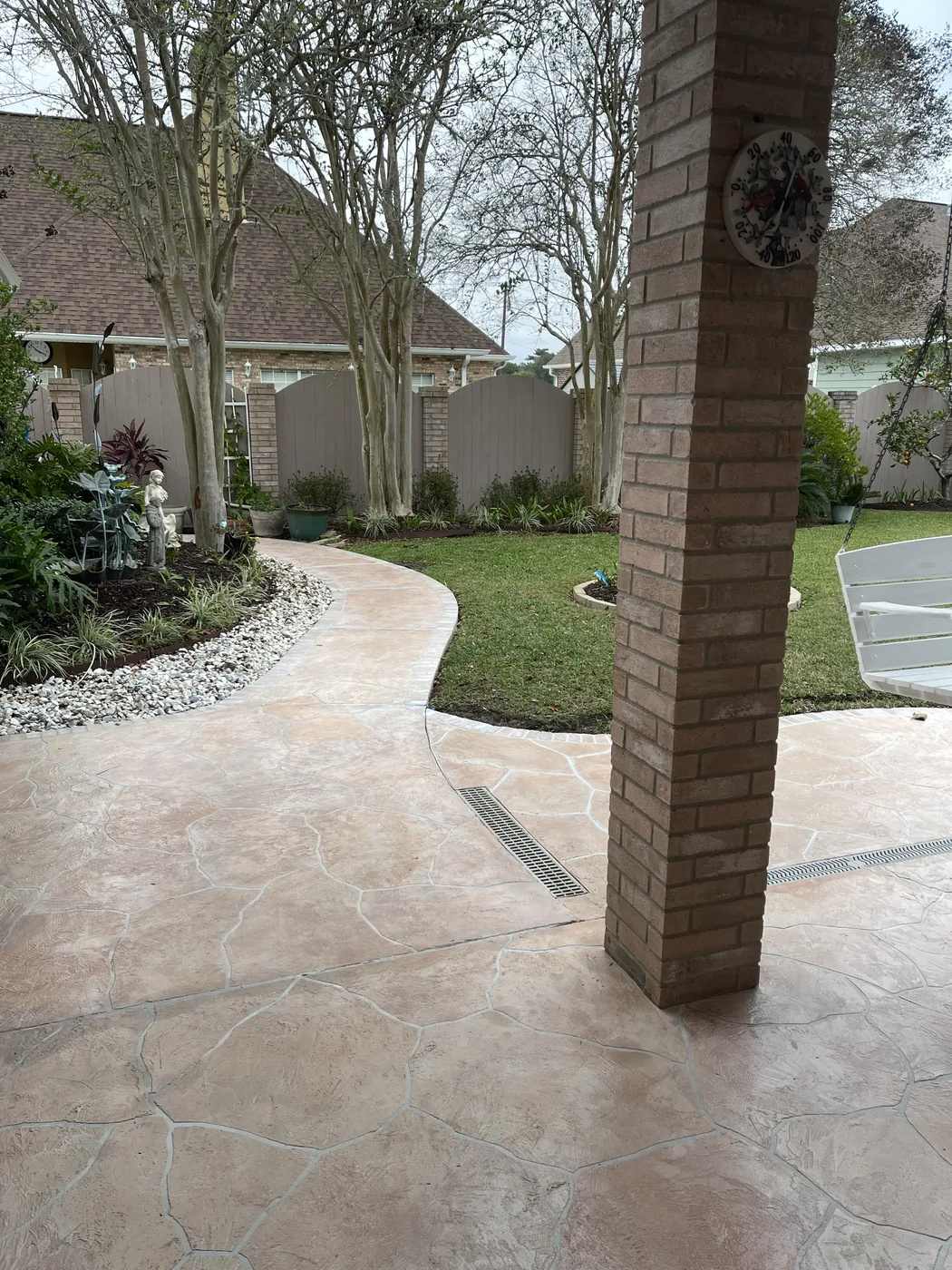
Decorative concrete is a finished surface, not maintenance-free concrete. The goal is to remove dirt before it becomes wear, avoid cleaning methods that damage the finish, and pay attention when the protective surface begins to change.
The basic care routine
For routine cleaning, remove loose grit and debris first, then use water and a mild, compatible cleaner as needed. A soft broom, microfiber mop or non-aggressive cleaning pad is usually a better starting point than harsh scrubbing.
Exterior surfaces can collect soil, leaves, organic growth and debris around drains or low areas. Keeping those areas clean helps you see the actual condition of the finish instead of allowing buildup to hide it.
Clean spills instead of letting them become a maintenance problem
Oil, grease, food, chemicals, fertilizer, pool chemicals and other contaminants should not be allowed to sit on a decorative finish. Blot or remove the material, clean the area with a compatible method, and avoid spreading the spill across a larger area.
If you do not know what is on the surface or what cleaner is compatible with it, ask before using a strong chemical.
What to avoid
Avoid assuming that stronger cleaning is better. Aggressive acids, strong solvents, abrasive pads, metal brushes and uncontrolled high-pressure washing can alter color, texture, sealer or coating.
Do not apply a new sealer or coating simply because the surface looks dull. The existing finish and previous protection need to be understood first.
Watch the protective finish
Changes that can justify a closer look include uneven sheen, areas that wet or stain differently, visible wear in traffic paths, cloudy or peeling protection, fading, or a surface that is becoming harder to keep clean.
These signs do not automatically mean the entire surface needs replacement. They help determine whether cleaning, localized repair, a refresh, compatible resealing or another approach makes sense.
There is no one reseal schedule for every project
A covered patio, full-sun entry, wet pool deck and interior floor do not age at the same rate. Sun, water, traffic, cleaning, texture and the existing system all affect maintenance.
DCOSL does not use one calendar interval as a substitute for looking at the surface.
When to send us photos
Send a wide view and close-ups if you notice peeling, cloudy areas, unusual wear, cracking, chips, staining, loss of color or a major change in how the surface looks after cleaning.