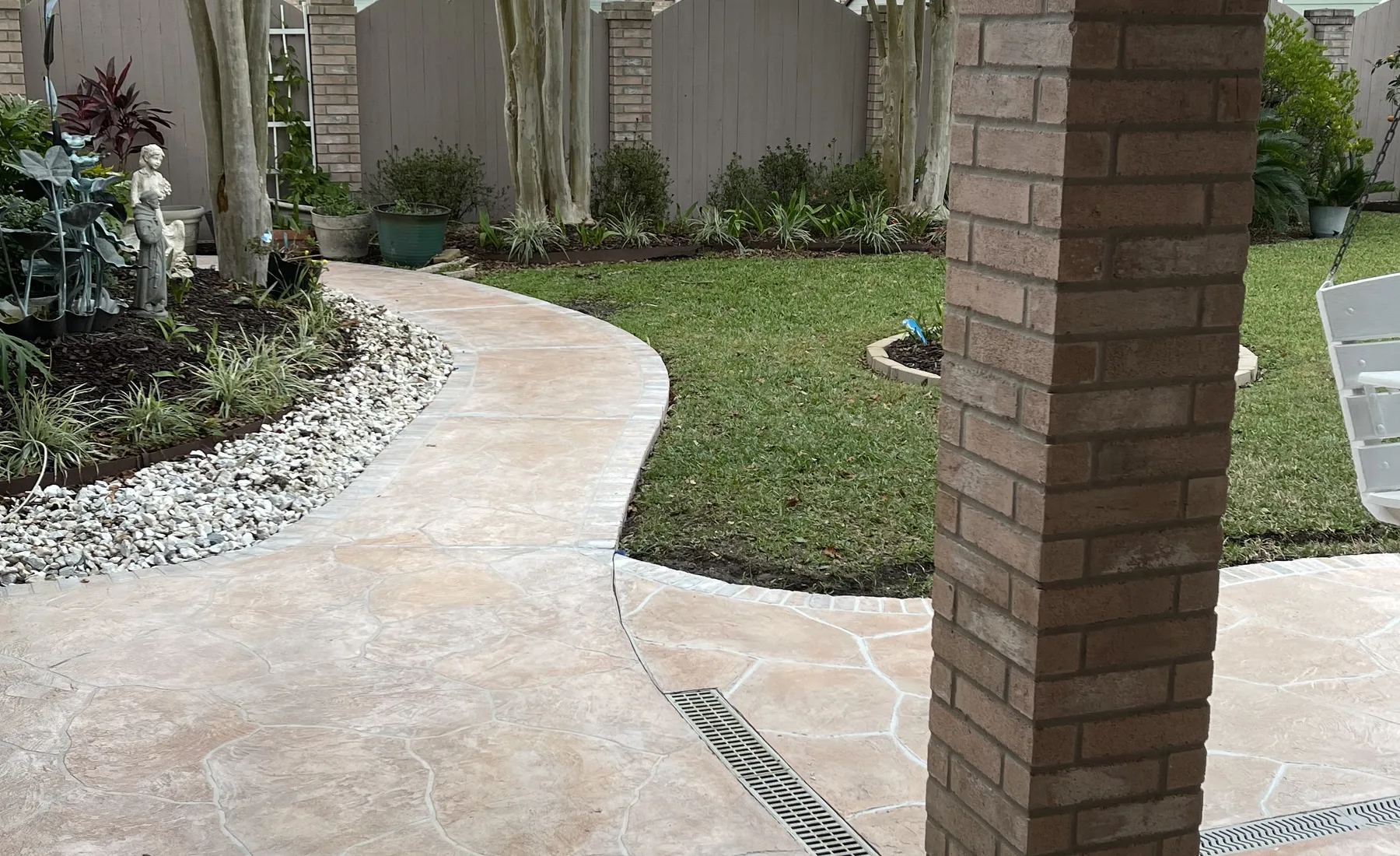
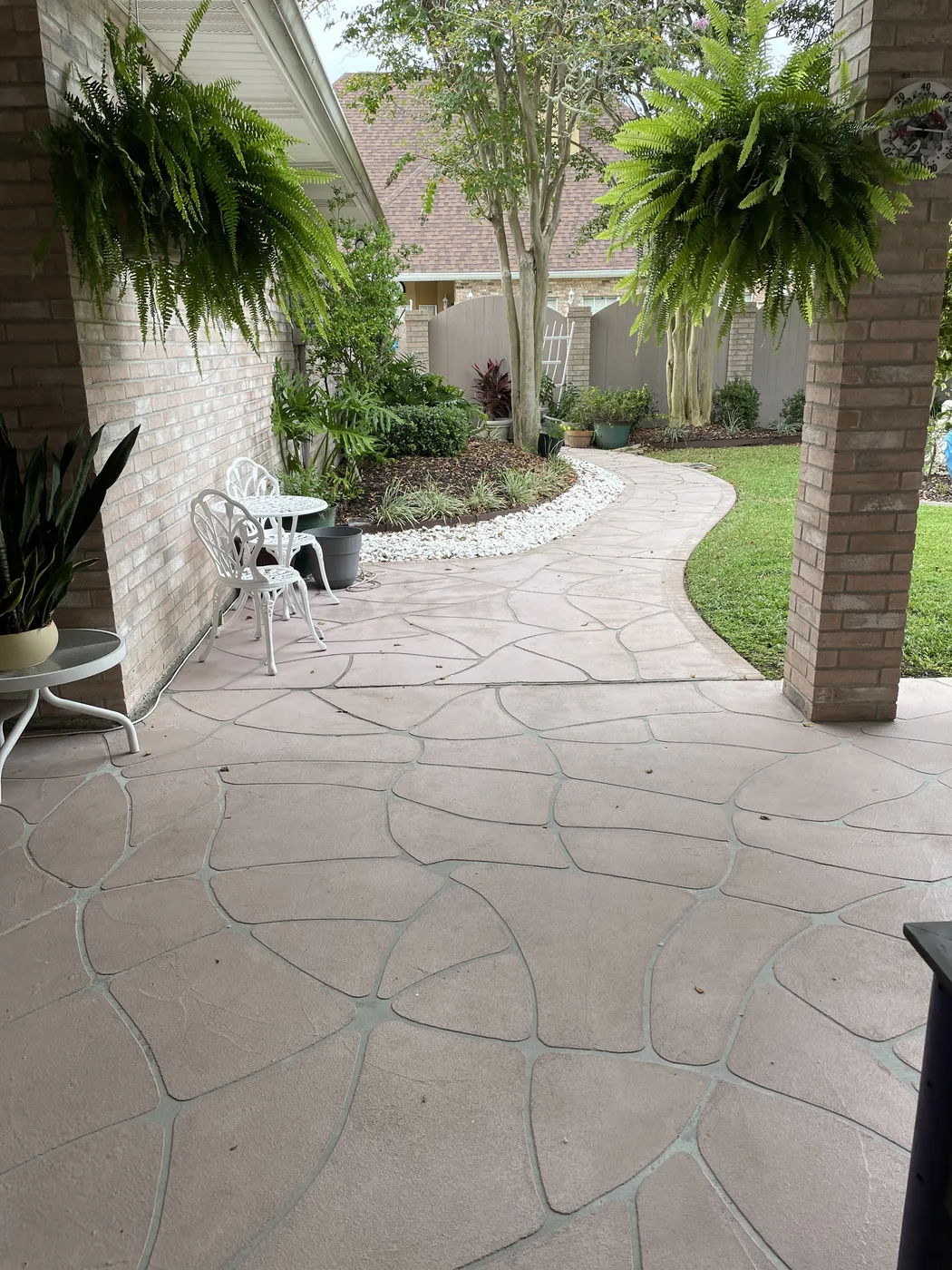
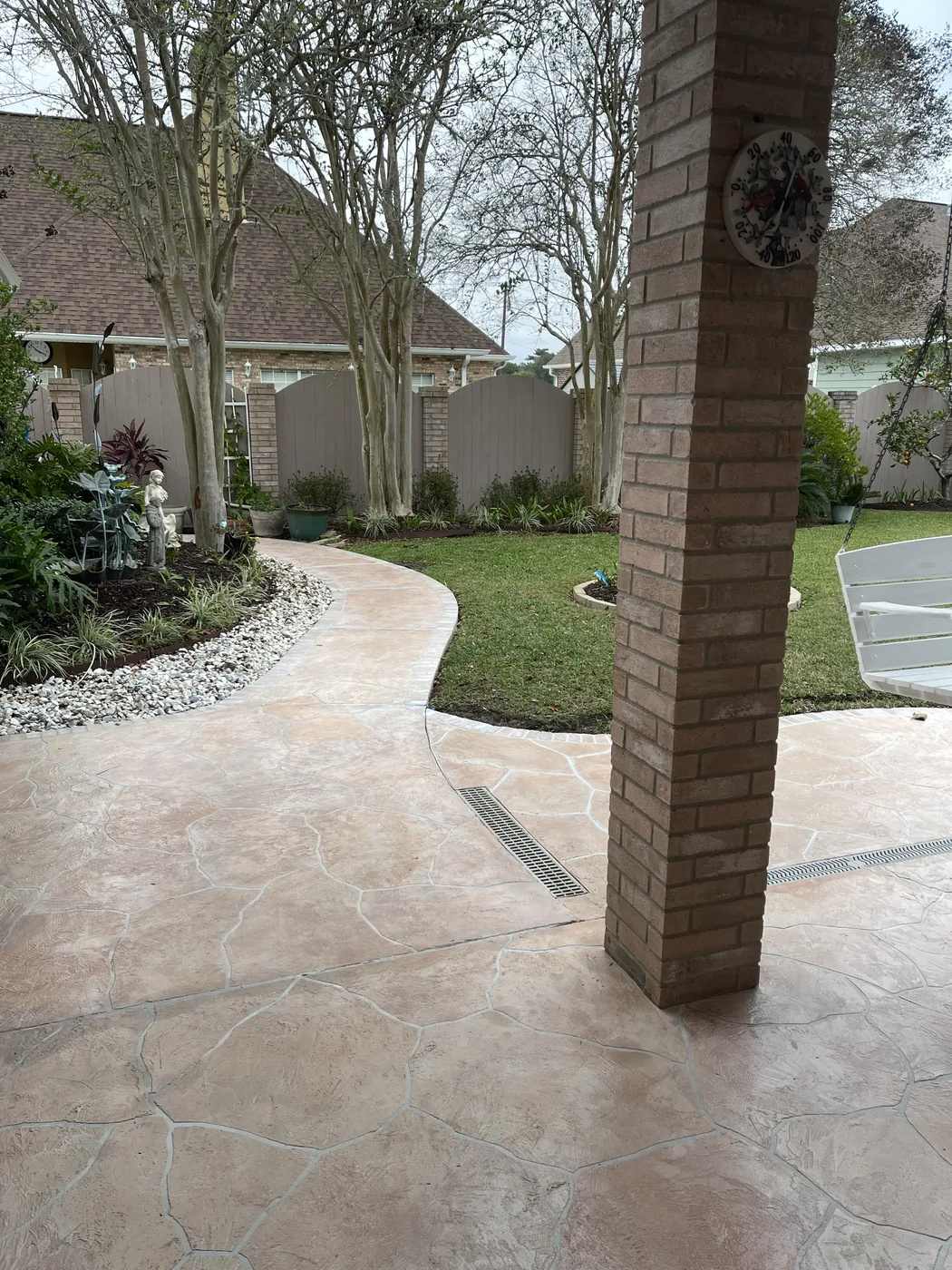
Refresh, Repair + Reseal is a restoration and maintenance service for existing decorative overlays and stained concrete surfaces that are still fundamentally sound.
Sun, rain, UV exposure, traffic, water, cleaning, age and normal wear can leave decorative concrete faded, dull, stained or uneven without necessarily meaning the decorative system has failed. When the existing surface is still bonded, stable and worth preserving, restoration can improve its appearance and renew its protection without replacing the entire finish.
If deterioration has progressed far enough that the coating or overlay itself has lost integrity, widespread failure is present or the surface can no longer be prepared and stabilized reliably, refreshing and resealing is usually not the right solution. At that point, the project moves toward removal and replacement or another appropriate system.
What This Service Is Designed to Address
A good restoration candidate may have:
- faded or dull color;
- UV or environmental weathering;
- normal traffic wear;
- staining or buildup;
- localized chips, spalls or repairable defects;
- inconsistent color or areas that need blending;
- an aged or worn protective sealer.
The important condition is that the underlying decorative surface remains serviceable and sound enough to preserve.
The Restoration Process
1. Thorough Cleaning + Stain Treatment
The surface is deeply cleaned and existing staining, contamination and buildup are treated as appropriate for the surface and what is actually present.
This is more than simply washing the concrete before resealing. The goal is to start with the cleanest, most consistent existing surface practical before repairs, color correction or new protection are applied.
2. Repairs + Corrections
Repairable cracks, chips, spalls and other localized defects can be addressed as part of the restoration scope.
The repair approach is not identical on every project. It may depend on:
- the type and location of the defect;
- the likelihood that movement or cracking may recur;
- how closely the existing color and texture can be matched;
- whether a repair can be blended into the surrounding decorative finish;
- the aesthetic tradeoffs of making the repair visible versus trying to disguise it.
Repairs can improve the surface, but they should not be presented as a guarantee that movement will never return or that every repaired area will become invisible.
3. Corrective Color / Stain Work
Where the existing surface supports it, faded areas, inconsistent color, borders, details or repaired areas can be selectively refreshed, blended, recolored or restained.
Application methods depend on the treatment and existing finish. Corrective color may be applied with a pump sprayer, applicator pad, sponge or other hand-application method where appropriate. The goal is to restore visual consistency without making the surface look painted.
4. Sealing + Protection
After the cleaning, repairs and corrective color work are complete, the restored surface is resealed with the project-specified protective finish.
Traction treatment can be incorporated where the application calls for it. The correct sealer and texture depend on the existing decorative system, exposure, use and surrounding conditions.
Restore It When It Is Sound
Refresh + Repair + Reseal is typically a good direction when:
- the existing overlay or stained concrete is still bonded and serviceable;
- deterioration is primarily visual or maintenance-related;
- fading, dullness, staining, UV exposure or localized wear are the main concerns;
- defects can be addressed while retaining the existing surface;
- the owner wants to preserve the existing decorative finish rather than replace it.
Replace It When the Existing System Has Failed
This service is generally not intended to rescue a decorative coating or overlay that has materially lost integrity.
Removal and replacement or another system may be the better direction when:
- there is widespread delamination or loss of bond;
- the existing coating or overlay is extensively deteriorated;
- damage is too widespread to stabilize reasonably;
- severe movement, settlement or heaving is driving the failure;
- the existing finish cannot be prepared to receive compatible restoration materials;
- deferred maintenance has allowed the decorative system itself—not just the sealer or appearance—to degrade beyond a practical refresh.
A new sealer does not make a failing decorative system sound again.
Maintenance Depends on Exposure and Use
A covered patio, full-sun decorative walkway, stained interior and wet pool deck do not age at the same rate. UV exposure, rain, traffic, water, cleaning methods, previous coatings and surface texture all affect how a decorative finish weathers and when maintenance becomes appropriate.
There is no single reseal interval that applies to every decorative surface.
Common Questions
Is this the same as simply resealing old concrete?
No. A proper restoration can include thorough cleaning and stain treatment, localized repairs, corrective color or stain work and resealing. The scope is based on what the existing decorative surface actually needs.
Can faded decorative concrete be brought back?
Often, when the existing overlay or stained concrete remains sound. Cleaning, corrective color work and fresh protection can improve a faded or dull surface, but the achievable result depends on the condition and history of the existing finish.
Can repairs be made invisible?
Sometimes repairs can be blended very effectively, but an exact invisible match should not be promised. Existing age, texture, color variation, movement and the repair material itself all affect the final appearance.
Will resealing stop a crack from returning?
No. Repair strategy and the likelihood of recurrence depend on why the crack exists and whether movement is still occurring. Sealer is a protective finish, not a structural repair.
Can every old sealer simply be coated again?
No. Existing sealer compatibility, bond, whitening, peeling, contamination and previous products have to be evaluated first. Some surfaces require stripping or more extensive preparation.
Show Us the Concrete You Want to Save
Send wide photos, close-ups of faded, worn, stained or damaged areas, and tell us what you want to improve. If you know what was previously applied or when the surface was last maintained, include that information.
The first decision is not which sealer to use. It is whether the existing decorative surface is still sound enough to be worth restoring.