When Does Decorative Concrete Need Resealing?
Use the condition of the finish, exposure and wear—not a universal calendar date—to decide when resealing should be evaluated.
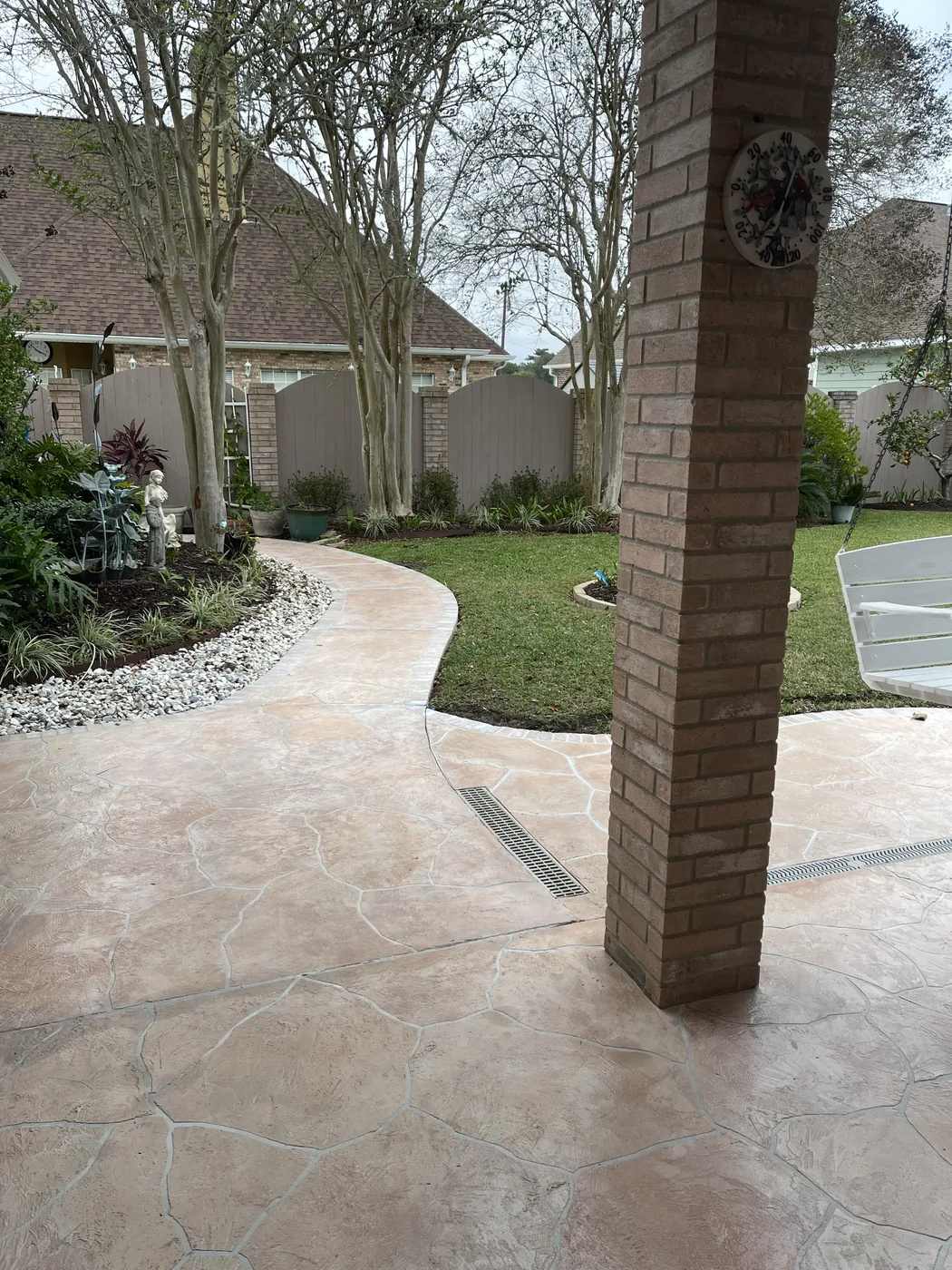
There is no single reseal interval that fits every decorative concrete surface.
Look at what the surface is doing
A maintenance review may make sense when the surface has lost protection or sheen unevenly, traffic paths are becoming obvious, water or stains behave differently in worn areas, color looks less protected, or the existing sealer is becoming cloudy, patchy or damaged.
Exposure changes the answer
Full sun, uncovered weather, pool water, regular wet use, vehicle traffic and frequent cleaning can age a finish differently from a covered patio or lightly used interior floor.
That is why the maintenance decision should be based on the project instead of a generic every-two-years rule.
More sealer is not always the fix
If an existing protective coat is peeling, whitening, incompatible or contaminated, putting another coat over it can make the problem worse.
Before resealing, the existing surface and protection should be identified well enough to choose a compatible preparation and maintenance approach.
Resealing does not repair movement
Sealer can protect a serviceable decorative finish. It does not correct settlement, heaving, structural movement or widespread delamination.
If those conditions are present, they need to be evaluated separately.
What to send for a maintenance review
Send a wide photo, close-ups of the worn or cloudy areas, the approximate age of the finish if known, and anything you know about previous sealing or maintenance.