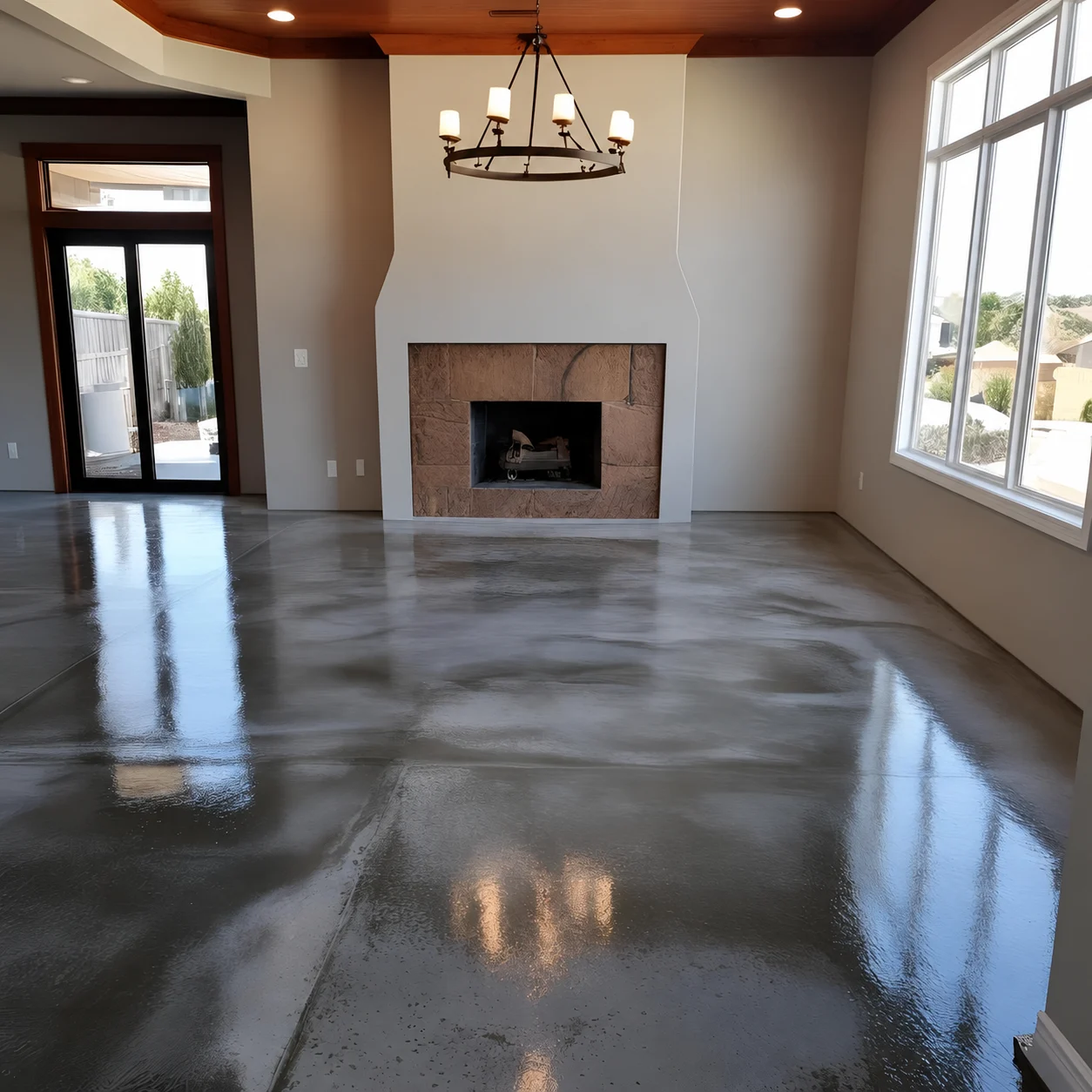
Metallic floors are created by moving and blending pigmented material across the floor. The result is visually active and hand-created rather than a printed pattern that repeats or can be duplicated line for line.
This page explains the metallic flooring system itself: how it is built, what creates the movement, how the finish is protected and what conditions affect installation. Whether metallic is appropriate for a particular room is determined by the application requirements and the slab.
Start With the Slab and the Room
The finished appearance is only one part of the decision. Before recommending a metallic system, we review the concrete, existing coatings, contamination, moisture-related concerns, repairs, room conditions and how the space will be used.
The room also needs to be ready for coating. Construction dust, uncontrolled temperature, other trades and traffic can compromise a high-cost finish during installation and cure.
A Layered System, Not a Decorative Shortcut
The exact project specification is confirmed after the slab is evaluated, but the installation generally follows this sequence:
- Inspect + prepare the concrete. Mechanically prepare the slab and address coatings, contamination and repairable defects within scope.
- Establish the base. Install the project-specified moisture-control/base layer when required by the slab and system.
- Build the metallic design coat. Apply the approved color combination and create the movement across the full floor.
- Protect the finish. Apply the specified protective finish and provide cure, return-to-use and maintenance guidance.
Choose a Direction, Not an Exact Repeat
Color relationships can be planned in advance, and a sample board is useful for establishing the general direction. The full-room floor will develop its own movement as the material flows and is worked across a much larger area.
- Dark dramatic direction: deep black, charcoal or smoke tones with contrasting movement.
- Neutral architectural direction: grays, silvers and softer transitions for offices and contemporary interiors.
- Warm movement: bronze, brown or earth-tone relationships where the surrounding materials call for them.
- Custom combination: a planned palette built around cabinetry, wood, furnishings or other permanent room finishes.
A sample communicates color relationship and movement direction. It is not a miniature pattern that can be enlarged and copied exactly across the room.
Where Metallic Floors May Fit
- offices, studios and showrooms;
- select residential interiors;
- retail or customer-facing spaces;
- feature rooms where the floor is intended to be part of the design.
For garages, shops and utility spaces where the priority is a multitone protective floor rather than flowing metallic movement, a full-flake system may be the better direction.
Temperature and Scheduling Matter
Coating decisions are based on the actual concrete surface temperature and the product’s installation and cure requirements—not only the room’s air temperature. Material temperature, slab temperature, humidity and the available cure window are considered before the project is scheduled.
We do not recommend forcing a high-cost metallic installation into conditions where dependable cure is questionable.
Plan for Furniture and Daily Use
No decorative coating is maintenance-free. Routine cleaning, furniture protection and appropriate chair mats or floor protection help preserve the finish. The care plan should match the protective system that is actually installed.
Metallic Floor Questions
Will the floor look exactly like the sample?
No. It will follow the approved color and movement direction, but every metallic floor is unique. Lighting and surrounding finishes also affect how the colors read.
Is a metallic floor the same as a flake floor?
No. Both are multi-layer coating systems, but a metallic floor is designed around flowing pigmented movement while a full-flake floor uses a broadcast flake field to create the visible finish.
Can it be installed late in the year?
Only when the actual slab temperature, room conditions and cure window meet the product requirements. The project should not be scheduled on ambient temperature alone.
What do you need to start an estimate?
Room photos, approximate dimensions, the current floor condition, any existing coating or flooring history you know, and examples of the color direction you like are enough to begin the conversation.
Start With the Room You Have
Send photos and rough dimensions, tell us how the space will be used and which color direction you are considering. We can evaluate whether a metallic system fits the slab and the project schedule before finalizing the design.