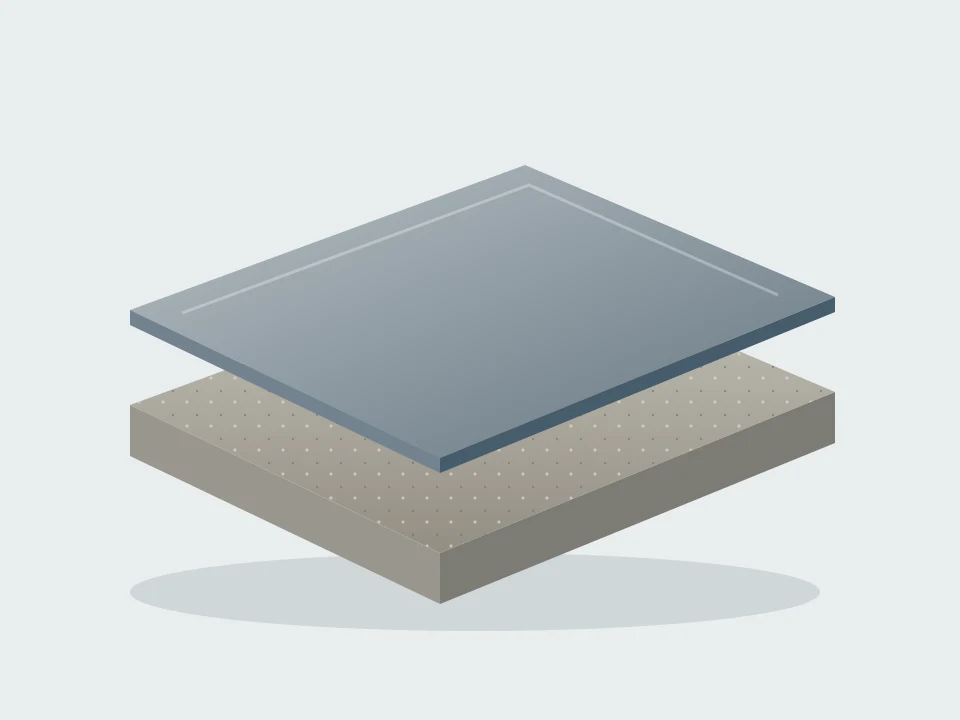
High-performance floor coatings are solid-color resinous systems built around the demands of the floor rather than a decorative broadcast pattern. The same system family can be configured toward a smoother, more uniform finish or toward a more aggressively textured surface when traction is a larger priority.
The decision is not simply “smooth or rough.” Substrate condition, traffic, cleaning, wet exposure, appearance, maintenance and return-to-use requirements determine the specification.
How the System Is Built
The exact materials and coat count are project-specific, but the system can be understood in layers:
- Mechanically prepared concrete. Existing coatings, contamination and weak surface material are addressed and the concrete is prepared to the profile required by the coating system.
- Primer / base layer. The specified resinous layer establishes the bonded base. Substrate and moisture conditions can change the required preparation or base specification.
- High-performance build layer. A solid-color resinous build coat creates the primary continuous floor surface.
- Texture configuration when required. Aggregate or another compatible texture component can be incorporated when the project requires a more aggressive surface profile.
- Protective finish. The specified wear surface is selected around traffic, cleaning, exposure and the desired final profile.
This is a plain-language system model. It does not imply that every project receives identical chemistry, thickness or coat count.
Smooth + Textured Are Configurations, Not Separate Services
A smoother solid-color floor can make sense when a uniform appearance and straightforward cleaning are the priority and aggressive traction is not required.
A textured configuration shifts the balance toward footing and wet-service performance. The amount and character of texture should be selected deliberately because increasing texture also changes how the floor feels and cleans.
That is why we treat smooth and textured floors as variations within one high-performance coating family rather than unrelated products.
Performance Comes Before the Finish Name
Before selecting the configuration, we look at:
- foot, cart, vehicle or equipment traffic;
- whether the surface is regularly wet;
- cleaning methods and chemicals used in the area;
- contamination and existing coatings;
- cracks, joints, patches and substrate damage;
- moisture-related conditions;
- drainage, thresholds and transitions;
- desired appearance and color;
- available installation and cure window.
The application page helps identify those operating requirements. This page explains the coating system that may be specified to meet them.
Traction Is Designed, Not Promised
No coating should be described as slip-proof. Surface profile can be increased where additional traction is appropriate, but real-world footing also depends on contaminants, footwear, cleaning and maintenance.
The goal is to choose a practical profile for the actual environment rather than automatically specifying the roughest possible floor.
Solid Color Does Not Mean Generic
A uniform color can create a clean, intentional floor that keeps visual attention on the space rather than on a decorative pattern. Color can be coordinated with the facility, surrounding finishes or operational needs while the surface profile is specified separately.
High-Performance Coating Questions
Is this only an industrial floor?
No. “High-performance” describes the system approach, not one building type. The same family can be evaluated for commercial, service, utility and other demanding environments when the substrate and operating requirements are appropriate.
Is the textured version a different coating?
Not necessarily. Smooth and textured surfaces are configurations within the broader system family. The complete specification determines how the required profile is achieved.
Is this the same as a flake floor?
No. Flake systems use a decorative broadcast to create the visible multitone field. High-performance solid-color systems are designed around a more uniform color, with texture configured separately according to the project.
Is more texture always safer?
Not automatically. Texture can support traction, but contaminants, footwear, maintenance and cleaning still matter. Excessive texture can also make cleaning more difficult.
Start With the Performance Requirement
Send photos, rough dimensions, current floor condition, how the area is used, how it is cleaned, whether it gets wet, and the type of traffic it sees. We can then determine whether a high-performance coating fits and what surface profile should be evaluated.