
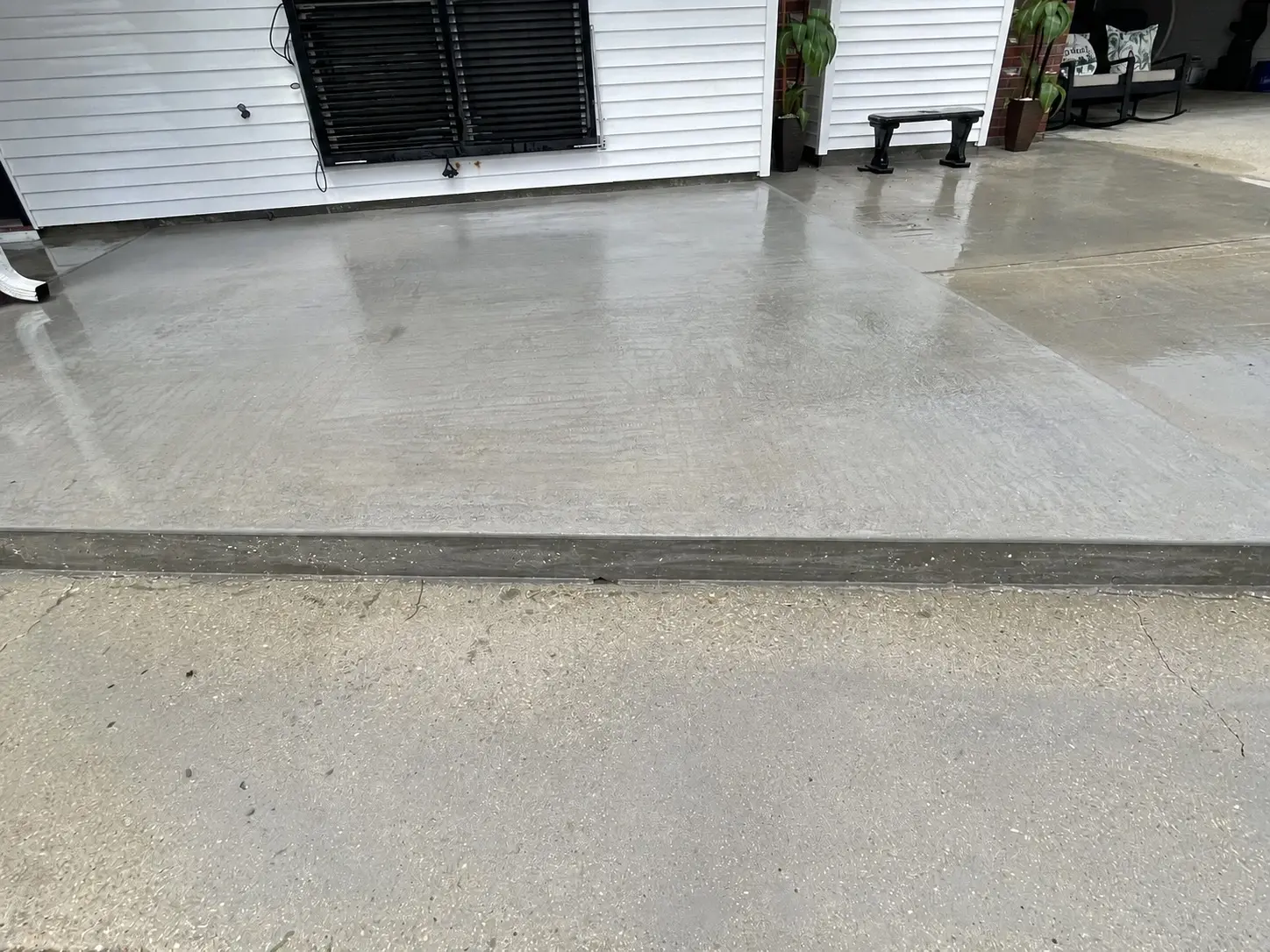
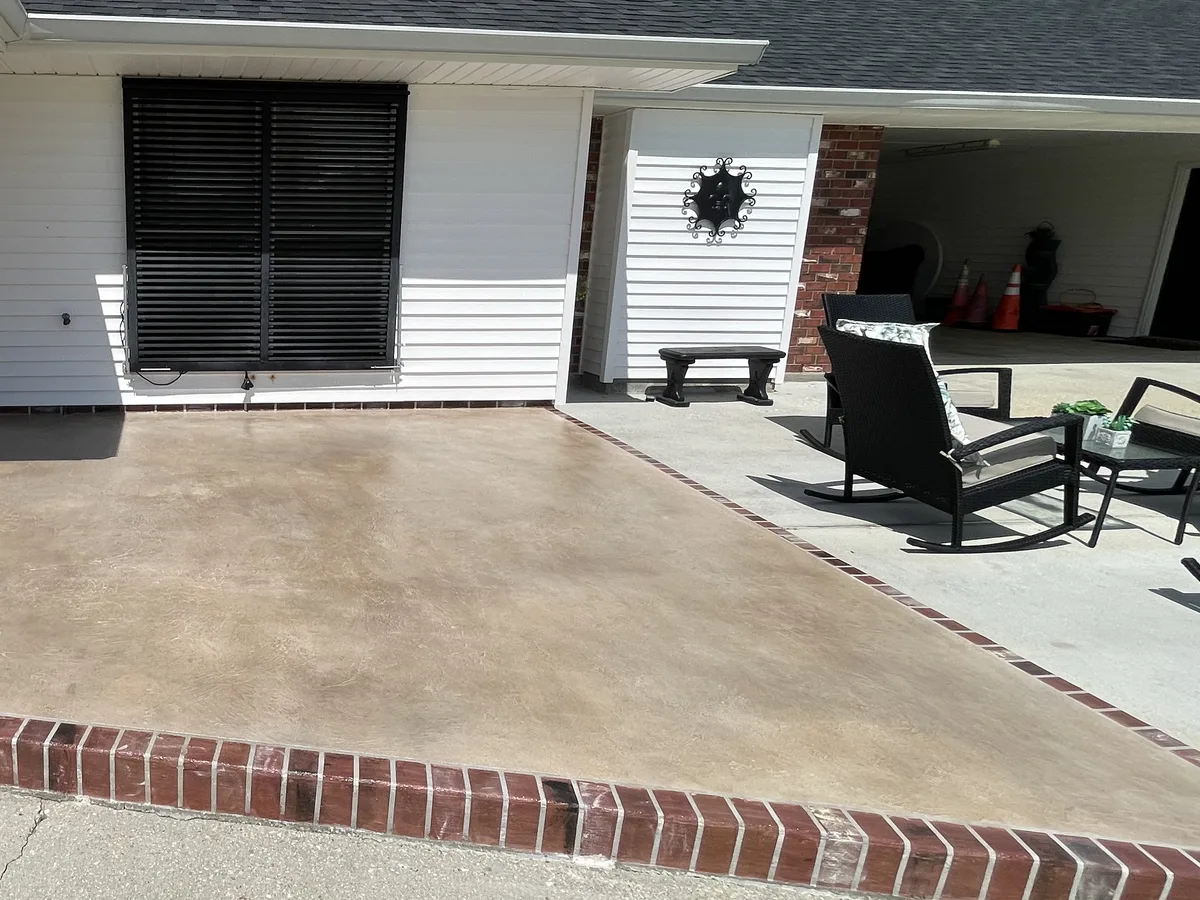
A patio is more than a slab once it becomes part of how you use the house. When the existing concrete is a suitable candidate, we can repair, prepare and resurface it with a finish planned around the architecture, the way the space is used and the look you want.
Start With How You Live Outside
The patio finish should work with the space instead of fighting it. Before we settle on a pattern or color direction, we look at where people sit and walk, whether the patio is covered or open, how it connects to doors and steps, and what other concrete meets the area.
- Covered vs. open: exposure changes sun, rain and drying conditions.
- Furniture + traffic: seating, grills, outdoor kitchens and walking paths affect pattern scale and transitions.
- Doors + steps + edges: thresholds, posts, brickwork and nearby concrete should feel intentional after the surface changes.
- Connected spaces: where a patio meets a pool deck, walkway or another finish, the transition should be planned rather than improvised.
Find a Direction That Fits the Space
Hand-Troweled Custom + Brick Detail
A custom-applied field can keep the surface visually simple while brick-look borders, bands or accents give the patio definition and connect it to existing masonry.
Flagstone / Stone
Hand-troweled stone-style patterns can make a large patio feel more organic, with individualized shapes, joint lines and color placement.
Tile
A geometric tile-style overlay gives covered and open patios a more structured layout while remaining a decorative concrete surface.
Wood Look
A hand-troweled plank direction can bring a warmer, more linear feel to outdoor-living concrete.
Knockdown / Spray Texture
A lower-profile textured resurfacing direction works when the priority is a clean outdoor surface rather than a more elaborate hand-troweled pattern.
Broom resurfacing remains an option where appropriate. Pattern direction, scale, color and borders are confirmed around the actual dimensions and architecture of the project.
The Finish Is Only One Part of the Design
- Borders + bands can frame a patio, define a seating area or connect a new finish to existing masonry.
- Pattern + scale should fit the size of the patio and the way it is seen from the house.
- Edges + thresholds deserve deliberate layout decisions so the finish does not end awkwardly.
- Color direction can coordinate with brick, siding, counters and adjoining hardscape while preserving natural hand-applied variation.
- Connected concrete may need a transition, border or separate maintenance plan rather than being forced into one finish.
Is the Existing Patio Worth Resurfacing?
Photos can help start the conversation, but slab condition and any existing coating still have to be evaluated before a resurfacing plan is recommended.
Often worth evaluating:
- structurally serviceable patio concrete that is worn, plain or dated;
- repairable cracks, chips or spalled areas within the project scope;
- older decorative concrete that needs a new design direction or refurbishment;
- a patio where the surface is the main problem rather than major slab failure.
May need another approach:
- major movement or structural failure;
- severe settlement, heaving or continuing movement;
- existing coatings or contamination that cannot be prepared reliably;
- conditions where removal and replacement is the better long-term recommendation.
Concrete moves. Crack treatment can be part of preparation when appropriate, but resurfacing does not turn a moving slab into structurally new concrete.
A Better Patio Finish Starts With the Surface
- Inspect + plan. Review slab condition, existing coatings, cracks, exposure, drainage, transitions and use.
- Prepare the surface. Clean and prepare according to the actual project requirements, including removal of contaminants or failing material where needed.
- Repair + establish the base. Address agreed repairable cracks, chips and spalls and establish the base for the decorative work.
- Build the finish. Establish the layout, create the selected texture or pattern, add color and accents, and refine joints, borders and transitions.
- Protect + maintain. Apply the protection specified for the project and explain maintenance and return-to-use expectations.
Plan the Patio for the Conditions It Actually Sees
South Louisiana patios can move between intense sun, humidity, heavy rain and long periods of wet use. Covered patios may stay damp differently than open areas, and the existing slab can reflect ground movement over time. Those conditions belong in the preparation, finish and maintenance plan.
Patio Resurfacing Questions
Can an existing concrete patio be resurfaced?
Often, yes, when the slab is structurally serviceable and the surface can be prepared reliably. Major movement or structural failure can change the recommendation.
Can a patio look like stone, tile or wood?
Decorative overlays can create stone-style, tile-style and wood-look directions, along with simpler textured and custom hand-troweled finishes.
What happens to cracks?
Cracks are evaluated during planning. Repair or treatment may be part of preparation, but no overlay can guarantee that future slab movement will never become visible.
How do I choose between a pattern and a simpler texture?
Start with the architecture, patio size, how busy you want the surface to feel, exposure, maintenance expectations and the way the space is used.
Ready to Rethink the Patio You Already Have?
Tell us what you want to change, roughly how large the patio is and what the concrete looks like today. Upload a few photos and choose a finish direction if one caught your eye. We will start by deciding whether resurfacing is worth evaluating for the space.